Retail crime bill expands ICE’s enforcement role amid skepticism
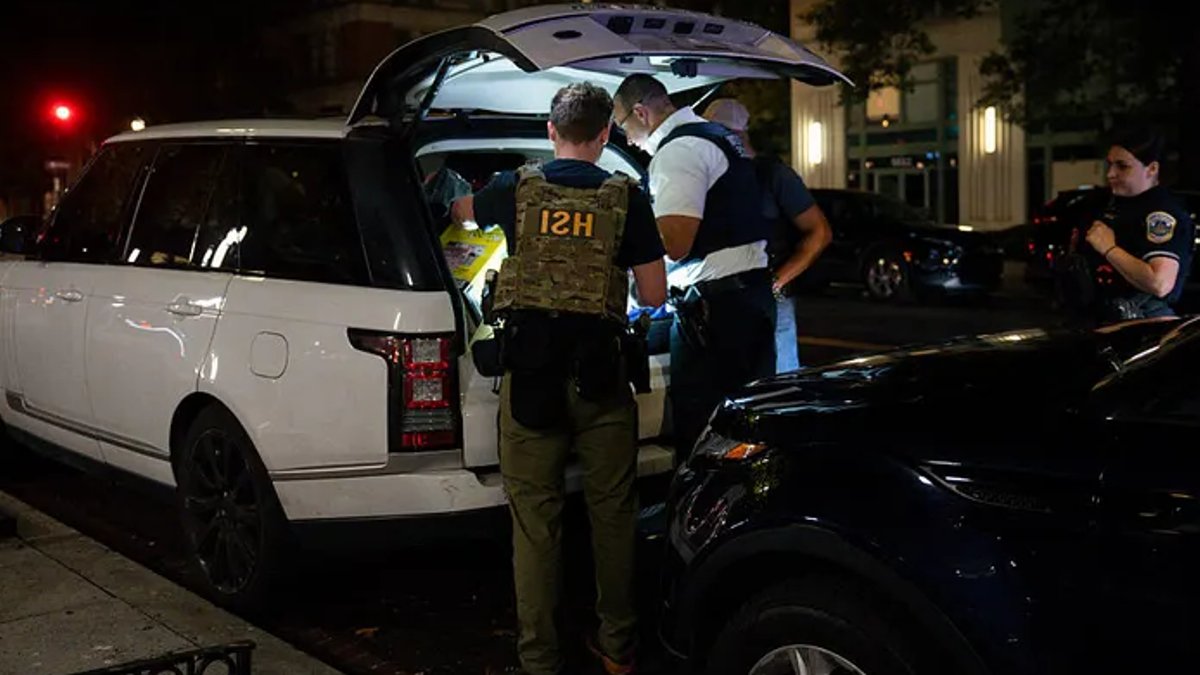
A bill advancing toward final approval would expand the role of U.S. Immigration and Customs Enforcement in addressing retail theft, despite rising public doubts about the agency’s methods and a broader shift in federal enforcement priorities toward deportation operations.
The Combating Organized Retail Crime Act (CORCA), which passed the House in May, is expected to clear the Senate before the end of 2024. The legislation establishes a new division—the Supply Chain Crime Coordination Center—within Homeland Security Investigations, an ICE unit. The center’s leadership position will be filled by an ICE appointee, further embedding the agency in retail enforcement efforts.
Retail trade associations have long advocated for CORCA, framing it as a tool to improve collaboration between law enforcement and private businesses. Critics, however, argue the measure blurs the distinction between theft prevention and immigration enforcement, particularly as ICE reallocates personnel away from its core investigative functions.
Data from the Cato Institute shows that nearly 90% of HSI agents, 6,198 out of 7,100, were reassigned to support ICE deportation operations in 2023.
“You have this retail-crime enforcement mechanism that is within ICE, plunged into communities and working directly with retailers,” said Evan Armstrong, senior vice president of government affairs at the Retail Industry Leaders Association.
Read Also: DSW testing new affordable luxury shop-in-shop concept
Retail groups clash over crime definitions
Proponents, including the National Retail Federation and the Retail Industry Leaders Association, have framed CORCA as essential for public safety. Opponents counter that the bill lacks precise definitions of “organized retail crime,” potentially lumping together disparate offenses like cargo theft and shoplifting. The NRF discontinued publishing its shrink estimates in 2023 after acknowledging past reports had overstated retail losses through methodological errors.
Some analysts question whether the problem of organized retail crime is even expanding. Jeff Asher, a retail crime analyst and co-founder of AH Datalytics, noted that without rigorous data, policymakers cannot accurately assess the scope or drivers of the issue. “I see people talk about organized retail theft, but we have really not a lot of strong understanding of what’s driving it and the scope of the problem, and whether or not the actual problem is getting bigger,” he said.
Public trust in ICE has eroded significantly. A July 2024 YouGov poll found that over half of Americans now express little to no confidence in the agency. Separate research from the Public Religion Research Institute shows nearly 60% of respondents believe ICE’s targeted enforcement actions in states like Minnesota undermine neighborhood safety rather than improve it.
Industry groups supporting the bill have declined to address concerns about ICE’s expanded authority. HSI, whose public communications are managed by ICE, did not respond to requests for comment on how the new center would alter its operational priorities.
New center raises enforcement and privacy risks
The Supply Chain Crime Coordination Center will operate under ICE’s existing enforcement structure, but its creation raises questions about how HSI’s resources will be prioritized. The center’s responsibilities include consolidating data across federal, state, local, and tribal law enforcement agencies, as well as private businesses, a level of integration without precedent.
Read Also: Amazon boosts Whole Foods pay and benefits for 20,000 workers
Jina John of the ACLU highlighted that HSI’s current operations already blur the line between its original investigative mission and deportation enforcement, with nearly all agents reassigned to removal operations last year. Under CORCA, the center’s director, selected by ICE, will have direct influence over enforcement policies, further aligning retail crime investigations with the agency’s broader immigration priorities.
Legal experts warn the bill’s vague definitions could expose retailers to liability. Heidi Altman of the National Immigration Law Center cautioned that stores collaborating with ICE risk becoming targets for racial profiling or aggressive enforcement, particularly in communities already affected by ICE surges. Nearly 60% of Americans, according to PRRI data, associate such operations with decreased neighborhood safety. Altman noted that HSI is no longer insulated from civil immigration enforcement, meaning retailers sharing data with the agency could inadvertently enable raids or practices that disproportionately harm marginalized shoppers.
Retailers fear becoming ICE partners by default
“Through this, retailers are going to be deputized to help ICE,” said John.
Altman added that “I would imagine that many retailers, small or large, don’t want their stores becoming a locus for racial profiling and aggressive immigration enforcement actions.”
The lack of clear legal boundaries under CORCA could enable arbitrary enforcement, particularly in stores already struggling with rising shrink rates. Retailers may find themselves caught between pressure to reduce losses and the risk of entanglement in immigration operations they did not seek.

DSW testing new affordable luxury shop-in-shop concept


